A fresh look at Illaiyaraja on the eve of his 82nd Birthday – with 100 of his best songs
Devan Nair
Table of Contents
Post Views:219
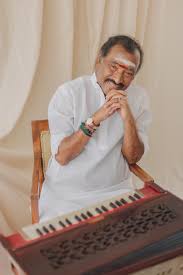
Illaiyaraja was born in Pannaipuram on 03 June 1943. He had a close friendship with former Chief Minister of Tamil Nadu, M. Karunanidhi. It was Karunanidhi who first referred to Illaiyaraja as “Isai Gnani”. Since Karunanidhi’s birthday was also on 03 June, Illaiyaraja decided to celebrate his birthday on 02 June as a mark of respect to Karunanidhi.
That does not sound as the action of an arrogant and self-centred person – yet this is how the media has been consistently painting Illaiyaraja over the last three decades.
Illaiyaraja’s loyalty and love for those who helped him has never faltered over the years. His gratitude, love and respect for the Late M.S. Viswanathan was echoed many times by him on various platforms, and he has often said that his knowledge of music is a miniscule fraction of what M.S. Viswanathan knew – Again, not quite the words of an arrogant, self-centred man.
Illaiyaraja’s loyalty and love for Panju Arunachallam, the producer who introduced him to film music not only remained strong, he in turn helped Panju Arunachallam on numerous occasions and continued to support him until Panju’s passing.
His adulation of industry seniors like S. Janaki and P. Susheela is well-known. The warmth and closeness he enjoyed with the Late Sivaji Ganesan is also widely known.
It can safely be said that Illaiyaraja reveres and respects all those who helped or inspired him to reach where he is today. Unfortunately, not all the people he has helped over the years has shown him the same loyalty – and this has undoubtedly embittered him to some extent.
Anyone who claims that Illaiyaraja is not a musical genius is either totally ignorant or totally unqualified to hold any opinion on music.
In 2014, the American portal on World Cinema – Taste of Cinema – placed him 9th in the list of the 25 greatest composers of all time. He was also the only Indian on the list.
This is what Sir John Scott, conductor of the Royal Philharmonic Orchestra in London had to say about Illaiyaraja’s first composition of a symphony way back in 1993 – a Symphony that remains unreleased to this day.
My first reading of the score…revealed that it was highly individual music in many ways, abounding with intricate rhythms as well as themes which linger in the memory refusing to go away. I could sense his love of the Western classical masters but I could also see the freshness which his culture brought to the ongoing tradition of true music…I asked Ilaiyaraaja to sing me various segments and give me an indication of his feelings regarding dynamics, tempi and intensities. This helped enormously when it came to facing the
orchestra with a new work which none of the orchestra had ever seen or heard. Everthing was brand new, straight from the copyist’s pen. Both the orchestra and myself felt a great responsibility in bringing this new work to life.
It was John Scott who first referred to Illaiyaraja as Maestro – a title deserving of his achievement.
These acts of recognition from non-Indians are not the reason to regard Illaiyaraja as one of the greatest composers India has ever seen. In fact, affirmation of foreigners should neither be aspired for, or used as a yardstick to determine the worth of a music composer.
This is especially true in the case of Illaiyaraja whose experimentation with ragams and western influences have created wildly fresh music that demands repeated listening to fully absorb its complex beauty. Even this is not a reliable way to assess his greatness, as many before him and some after have also experimented with clever mixing of genres, scales and melodies.
Instead, Illaiyaraja’s greatest claim to genius as the mind-boggling speed with which he composes – a feat that is clearly beyond normal human abilities. In a matter of 10 minutes, Illaiyaraja can compose a tune on his harmonium and then scribble short notes on various pages that he would hand to his assistants to transcribe neatly into proper notation and, within minutes, every musician has a score in front of him/her that will converge into a mesmerising piece of music – all within a span of 10 minutes or less.
The complexity of these compositions and the multiple influences of world music and Carnatic bases does more than simply create a new kind of infusion – Instead, it is a seamless and intrinsically Indian composition that is deeply rooted in Carnatic music regardless of how modern the music is.
In this way, Illaiyaraja is completely different from other music composers in the film world now. While others programme layer upon layer of music, rhythms and other effects, often taking up to a month (or beyond) to complete one song, Illaiyaraja can go from conception to a fully recorded song within one day.
He still composes on the same harmonium he used to compose for Annakilli and only he knows and understands how those harmonium notes get transformed into complex rhythms and melodies utilising a combination of techno music and real instruments.
His ability to convey emotion through music remains unmatched. Equally unmatched is the complexity of his preludes and interludes that often traverse multiple genres, styles and musical patterns within 1 minute or less. Our ongoing series of articles on Illaiyaraja will continue to explore the man and his music.
Illaiyaraja turns 82 on 03 June 2025, but will celebrate this milestone on Monday, 02 June 2025.
After several months, the Sigaram team has come up with our selection of the Top 100 songs of Illaiyaraja – an insanely difficult task which could never ever find favour with any Illaiyaraja fan, but is being humbly presented to you from fan to fan.
Post Views: 9 Karthik Subbaraj’s tenth film, Dorothy, has enjoyed increased footfalls and positive reviews in its 29-day theatrical run before its release on Netflix
Post Views: 11 Nelson Dileepkumar’s sequel to his 2023 Rajinikanth starrer, Jailer, is a sincere and earnest attempt to improve on the original. Nelson has