


Today marks 50 years since the release of the Sivakumar-Sujatha starrer, Annakili – a film that released on 14 May 1976. Little did anyone know at the time that the music composer who made his debut through this film would go on to create, shape and develop the film-related careers of literally hundreds of people.
A lot has been written about Illaiyaraja’s amazing ability in music composition – speed of composition that defies logical explanation, multiple layers of instrumentation created by a few strokes of his pen, blending western classical, Tamil Carnatic, western melodies and folk melodies into a new genre of music and a prolific career that has surpassed 1500 films.
One of the under-appreciated contributions of Illaiyaraja is the intensity, care and creativity he shows in his background score. His use of theme music pieces in different films shows the same orchestral intricacies and finer details of music arrangement that the world’s greatest composers achieved with a smaller volume and greatly reduced frequency. It is difficult to imagine Maniratnam’’s earlier films – like Pagal Nilavu, Idhaya Kohyil, Mouna Raagam, Agni Natchathiram, Anjali, Idhayathai Thirudathey or Thalapathi – without Illaiyaraja’s magnetic songs. It is impossible to imagine those films without Illaiyaraja’s background score.
In films like Vidiyumvarai Kaathiru, Naan Vaazhavaippen, Mundhanai Mudicchu and Vetrikku Oruvan, his music transformed and elevated the film well above the script. For those who thought he had passed his prime, he reasserted his genius in Vetrimaran’s Viduthalai 1 and 2 with his soundtrack and background score.
His completion of his second symphony (his first official one) last year has been the source of pride for all Tamilians. At 82, he still remains standing for 4-hour concerts, openly sharing his experiences in composing various songs and the details of his illustrious career.
Like he has done all through his career, he continues to score music for first-time directors, actors or producers while still honouring those who worked with him in the past. While many have forgotten his generosity, Illaiyaraja himself has never forgotten those who have helped him get to where he is now.
A lot more has been written lately from ill-informed people about Illaiyaraja’s fight against the use of his music without prior permission.
Some have even written about how he has been made redundant by the likes of A.R. Rahman, Deva, Vidhyasagar and – recently – Harris Jayaraj and Anirudh Ravichander.
Yet, despite all these factors, and despite the fact that many who had the careers shaped by him have recently ignored him, Illaiyaraja continues to immerse himself in the one thing he loves and respects – music. He still starts his day at the recording studio at 07h00 every day and still considers himself a student of music.
He frequently pays tribute to the great Indian and international composers who have influenced his music, and he continues to honour and respect those who have helped him in his career or in his personal life. That kind of respect and loyalty is rare in any industry, and particularly rare for someone who reached the pinnacle of his profession many years ago.
It is easy for Illaiyaraja to retire completely from music as his massive repertoire will continue to inspire generations of music lovers, but he continues to show the same reverence and adulation towards music as he did before entering the film industry.
There are those who affirm that his music is no longer relevant, that he should have retired many years ago and that his music does not appeal to the current generation. Then are those who have discovered a simple trait of his music – that his music skips the ear and goes directly to the soul.

Spoiler-free Review of “Dorothy” – Now streaming on Netflix
Post Views: 9 Karthik Subbaraj’s tenth film, Dorothy, has enjoyed increased footfalls and positive reviews in its 29-day theatrical run before its release on Netflix
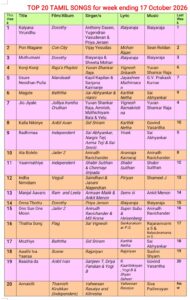
TOP 20 TAMIL SONGS for week ending 17 Oct 2026
Post Views: 8 2nd week at Number 1 for “Kalyana Virundhu” from “Dorothy” and one new entry. This week’s Top 20 – Click Here to

Cine News Digest – 18 Oct 2026
Post Views: 9 Rajinikanth’s Jailer 2 on its way to smash records Jailer 2 is hurtling towards the 400-crore mark globally and could become Tamil

Spoiler-free Review of “JAILER 2”
Post Views: 10 Nelson Dileepkumar’s sequel to his 2023 Rajinikanth starrer, Jailer, is a sincere and earnest attempt to improve on the original. Nelson has
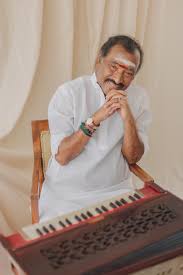
Music Composer Deva dies at age 75
Post Views: 9 Respected and popular music composer Deva – popularly known as Thenisai Thendra Deva – passed away earlier this morning at the age
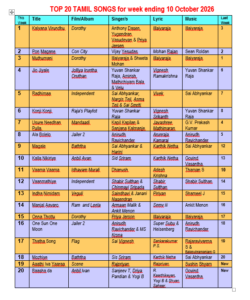
TOP 20 TAMIL Songs for week ending 10 October 2026
Post Views: 14 Click here to watch all 20 Songs or select your favourite Facebook Twitter LinkedIn