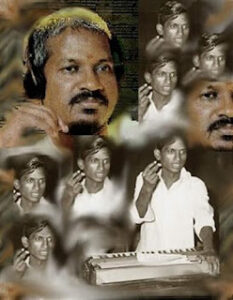
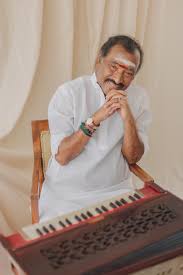
Illaiyaraja was born Nyaana Desigan on 03 June 1943, was rechristened Daniel Rasaiya after his family converted to Christianity but he was an atheist when he was renamed Illaiyaraja in 1976 by Panju Arunajallam, the producer-writer-lyricist-director who introduced him to the film world through Annakilli. In a career that spans 48 years and more than 5000 songs in more than 1000 films, there are few musicians today who can claim not to be greatly influenced or shaped by his music.
He has been likened to world greats like John Williams, John Cage and Jerry Goldsmith. It is a pity that his music was largely confined to Indian ears because of his concentration on the southern film industry which still lags in world marketing. It is therefore possible that his genius remains largely unknown in the western world.
http://www.youtube.com/watch?v=AsN_9uXAoNE
A genius in the true sense of the word, Illaiyaraja is able to compose quickly and accurately in mind-boggling time, creating tune after tune within minutes. Some famous examples are how he tuned all the songs for Chinna Thambi in 3 hours, 5 songs from Iniya Uravu Poothathu in 4 hours and all the songs for Karagaatakaaran in 6 hours
Apart from the beautiful melodies, Illiayaraja enthused, delighted, amazed and moved music lovers with his unusual music interludes and introductions.
http://www.youtube.com/watch?v=AD_pbXAVw54
Equal to his ability to tune songs is his marvelous ability to create moods through his background score. Background music was hardly recognizable in most films until Illaiyaraja stepped onto the scene. It is difficult to imagine films like Vidiyumvarai Kaathiru, Anbukku Naan Adimai, Ullaasa Paravaigall or Naan Vaazhavaippen without Illaiyaraja’s background score.
It is equally difficult to imagine Manirathinam’s greatest films without Illaiyaraja in it. Who can forget the haunting background score in Naayagan or the moving sounds of Mouna Raagam or Thallabadhi.
http://www.youtube.com/watch?v=-RdltrvAvJ8
Always eager to experiment, Illaiyaraja was the first to experiment with rap in Vikram (title song and the beginning of Vanithamani); the first to incorporate a Tamil aerobics song with Chikkendra Aadaiyil in Iniya Uravu Poothathu, the first to have a full German song in Nadodi Thendral and the list could go on.
His work in Sindhu Bhairavi opened the door to the beauty of Carnatic music for many, like me, who did not know or understand the power of Carnatic music.
http://www.youtube.com/watch?v=zqsg1sVrhwM
A sure sign of his versatility, his fans are divided about whether he shot to fame because of his rural melodies or because of his western-influenced songs. Another group would argue that it was his strong Carnatic base while others would claim that a completely new genre made his music unique.
Illaiyaraja’s music shaped my life: it played in my head for every emotion I felt as I was growing up, particularly in my teen years. As a die-hard fan of his, I am not going to even pretend objectivity about his musical genius but do want to share with you why I believe he is the greatest film composer Tamil cinema has ever seen.
http://www.youtube.com/watch?v=JQiEhx9dGjM
There have been many music composers who have created fusion music in the past, joining or stitching together different rhythms and styles in an interesting synthesis but Illaiyaraja’s music goes way beyond this: He blends so many different music styles in a way that is hitherto unimagined to create a kind of sound that is truly unique. His use of Carnatic bases in film songs effectively created a new genre of music.
For me, what had always impressed me about Illaiyaraja was that no matter how westernized the instrumentation and how westernized the vocals, there was always something that kept the song firmly entrenched in the sound of Indian music – so unlike much of the music of today. None of Illaiyaraja’s songs can be mistaken for western songs, although those who love western songs would love the way he incorporates western influences into his music.
http://www.youtube.com/watch?v=SPovSWUwjpw
Highlights of my experience of Illaiyaraja’s music in films
My first recollection of Illaiyaraja was in Sivaji Ganesan’s Deepam. When the film opens with the song Raja Yuva Raja, I could not believe my ears about how different the song and instrumentation were.
http://www.youtube.com/watch?v=_Sbagbaanow
The first time I recall seeing his name in the credits was with Ullaasa Paravaigall. Although I enjoyed the music there, it was not until a decade later that I began to appreciate the richness of the music there.
When I saw Anbukku Naan Adimai, I found myself getting goosebumps when the film started with Illaiyaraja’s arresting background score.
Then came the advent of video (VHS) and I got the opportunity to listen repeatedly and even record (on audio cassettes – for those who can remember what these were) the background score. I still recall the first film I saw on VHS – Kamalhassan’s Sattam en Kaiyil whose title music had me sitting up in wonder. Then came the beauty of each of the songs and the very rich background score. I remember going almost delirious with delight on hearing Sorrgam Madhivile and could not get the song out of my mind.
http://www.youtube.com/watch?v=SWw2yhqa7VI
Watching movies on VHS drew me a lot closer to Illaiyaraja: The background score in films like Vetrikku Oruvan, Naan Vaazhavaippen and Mundhanai Mudichu led me to the firm belief that a movie could not reach its potential unless it had Illaiyaraja in it.
My first choice of songs in films was always the beaty, energetic songs: Sorrgam Madhuvile from Sattam en Kaiyil, Rasigane from Manipur Maamiyaar, Madai Thiranthu from Nizhalgall and caught my attention immediately but I soon grew closer to his melodies like Adi Aadu Poongodiye from Kali; Oru thanga Raththathil from Dharma Yuddham, Deiveega Raagam and Naaan undhan Thaayaaga Vehndum from Ullaasa Paravaigall, Orey Idam from Sattam en Kaiyil, Illaiya Nilaa from Payanangall Mudivathillai and Yen iniya Pon NIlaave from Moodu Pani and Ponmaalai Pozhudhu from Nizhalgall were my very early favourites. These are songs I still enjoy today.
http://www.youtube.com/watch?v=O1P56dvXo9c
Later on, I became immersed in the sheer magic of songs like Poonkathave from Nizhalgall, Shri Devi Yen Vaazhvil from Illamai Kolam, Ninnukori Varnam from Agni Natchathiram and other similar gems.
To be honest,I was disappointed at many of his songs from the 90s although there was the occasional gem – but what a comeback it was in Neethane en Ponvasantham! I still cannot get over the variety in instrumentation, arrangements and melodies – all with real instruments.
Illaiyaraja, now a deeply spiritual person, prefers a life away from cameras and attention, only rarely consenting to give interviews.
His songs and background music in Viduthalai is evidence of a musician who has been able to adapt to changing audiences.
My earnest wish is that his fame and genius should reach a greater audience. What he achieved in albums like How to name it and Nothing but Wind deserves a wider audience.