Exploring the Enigma called Illaiyaraja – Episode 1 (Introduction)
Devan Nair
Table of Contents
Post Views:211
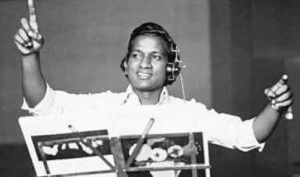
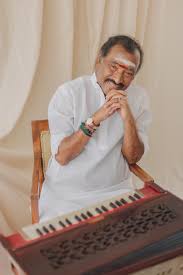
How does one adequately profile a living legend like Illaiyaraja – a genius of unbelievable depth whose career spans more than 1500 films, more than 7000 songs and who has performed in more than 20 000 concerts!
In a 2013 poll held by CNN-IBN, Illaiyaraja was voted as the greatest Indian music composer of all time. A year later, American cinema portal, Taste of Cinema, ranked him at number 9 in the list of the world’s 25 greatest music composers.
Illaiyaraja’s speed at composing is legendary. There were many entire albums that he had completed in one day. Among the films in this list are Chinna Thambi and Karagaatakaaran. He composed all the songs from Thalapathy in half a day and composed the 9 songs in Chembaruthi in just 45 minutes. It is simply a superhuman feat whichever way one looks at it.
Today’s youth may not have been exposed enough to the incredible talent of this amazing genius and the vastness of his repertoire since his entry onto the film scene in 1976. Even after 49 years, the depth of his instrumentation and his relentless experiments with ragas and fusion, remain a source of inspiration for many of the current generation of music composers, including Devi Sri Prasad, Vijay Anthony and Santhosh Narayanan.
Illaiyaraja remains one of the most misunderstood, misinterpreted and under-appreciated musicians ever. This series of articles will look at some of the factors that made Illaiyaraja seem to some as the villain of the music world.
The term Maestro refers to a Master of the art and extends to a composer, conductor or teacher of music. It is not a title that should be used lightly. Even Illaiyaraja was not referred to as Maestro until he had composed his first symphony for the London Philharmonic Orchestra which was recorded in 1993 and conducted by the famous John Scott. This was – all of 32 years ago – the first Symphony composed by an Asian composer.
The Symphony incorporated Indian instruments and this inclusion prompted some scathing criticisms from western music critics that hurt Illaiyaraja so badly that he refused to release the Symphony to the public. Respected composer and conductor John Scott famously lashed out at the critics and implored Illaiyaraja to ignore them and to release the symphony but Illaiyaraja refused.
Strangely, when he performed his Symphony earlier this year, it was named Illaiyaraja’s Symphony Number 1 and the Maestro himself never made mention of this 1993 Symphony. It was also quite remarkable that no journalist who interviewed him even asked him about this lost symphony.
When Illaiyaraja returned to India, he was reluctant to score film music and wanted to experiment more with his compositions. This reluctance was fed by the fact that the revolutionary directors of the 1970s and 1980s had passed their prime and the new generation of directors did not give as much prominence to background music and songs, or were trying to popularise a non-Carnatic based approach to film music. Despite this self-imposed semi-retirement from films, this period saw him compose music for over 350 films – substantially more than the career total of most composers.
Each episode in this series will look at ground-breaking songs of Maestro Illaiyaraja. In this episode, we will look at the song Vandhaal Magalakshmiye from Kamalhaasan’s 1985 film, Uyarndha Ullam. Like many of Illaiyaraja’s songs, the song has a Carnatic base and, in the case of this song, completely undisguised. The freshness of his approach can be seen in his audacious instrumentation that retains the Carnatic flavour, but dilutes it with western flavour without interfering with the Carnatic structure. S.P. Balasubramaniam is in his element in this song, having what is clearly unbridled fun in his rendition.
Post Views: 10 Karthik Subbaraj’s tenth film, Dorothy, has enjoyed increased footfalls and positive reviews in its 29-day theatrical run before its release on Netflix
Post Views: 12 Nelson Dileepkumar’s sequel to his 2023 Rajinikanth starrer, Jailer, is a sincere and earnest attempt to improve on the original. Nelson has