Remembering J.P. Chandrababu on his 98th Birth Anniversary
Devan Nair
Table of Contents
Post Views:152
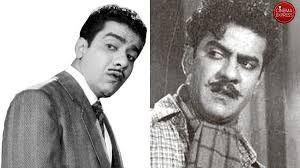
Joseph Panmayadas Chandrababu Rodriguez was born on 5 August 1927. He was born into a wealthy Christian family but, because his father ran an independent newspaper, their assets were seized by the British government, forcing them into exile in Colombo, Sri Lanka.
The family returned to Chennai in 1943 and Chandrababu found himself drawn to acting. His Sri Lankan upbringing meant that he was familiar with western style singing and dancing. After many closed doors, he finally landed a role in the 1947 film, Dhana Amaravathi
No further offers came his way and a dejected Chandrababu attempted suicide in Gemini Studios after leaving a suicide note. As attempted suicide was a criminal offence back then, he was arrested and tried. When the judge asked him to prove his acting ability, Chandrababu spontaneously delivered a Shakespearean monologue resulting in the judge setting him free.
One of the Gemini Studios employees who took Chandrababu to the hospital was Gemini Ganesan. When S.S. Vasan, the founder of Gmini Studios learned of Chandrababu’s passion for acting, he offered him a small role in the 1952 film Moondru Pillaigal.This finally opened up more acting opportunities for him.
Chandrababu was also a talented singer and, until 2016, was considered the only Indian artist to authentically yodel. In the movie Chinna Durai produced and directed by actor T.R. Mahalingam, he incorporated yodeling for the first time in a South Indian film for the song Poda Roja Podi Nadaya. His fame grew, and he was soon the highest paid comedy actor in South India.
After the filming of Sahothari, A.V. Meiyappan felt that the movie lacked something. Chandrababu saw the film, wrote and starred in a separate comedy track and turned the film into a hit, giving him also his first megahit with song Naan oru Muttaallanga.
His role with Sivaji Ganesan in Sabash Meena catapulted his fame. He extended his singing toplayback singing, singing for many actors, including Sivaji Ganesan in Kalyaanam Panniyum Brammachari.
Chandrababu met and fell in love with an Anglo-Indian girl called Sheila and they were married in 1953 in a grand ceremony attended by many dignitaries from the acting, music and political fields. Shortly after their marriage, Sheila confessed to being in love with someone else and this ended in divorce – quite a scandal in those days. She soon married a doctor after Chandrababu had given his consent.
However, the incident left him embittered, angry and quite misogynistic. Coupled with his attempts to drown his sorrows with alcohol, Chandrababu’s ill-chosen words burnt many bridges.
Chandrababu’s love story inspired K. Bhagyaraj to write and star in the film Antha 7 Naatkal.
A planned directorial debut in a film with MG Ramachandran in the lead roles did not materialise because of his insulting words towards M.G. R’s brother, M.G. Chakrapani. MGR later forgave him and gave him a small role in Adimai Penn.
His career and life went downhill thereafter and he died a pauper on 08 March 1974. His last rites were fully paid for by Sivaji Ganesan.
Post Views: 11 Karthik Subbaraj’s tenth film, Dorothy, has enjoyed increased footfalls and positive reviews in its 29-day theatrical run before its release on Netflix
Post Views: 12 Nelson Dileepkumar’s sequel to his 2023 Rajinikanth starrer, Jailer, is a sincere and earnest attempt to improve on the original. Nelson has