Exploring the Enigma Called Illaiyaraja – Episode 2
Devan Nair
Table of Contents
Post Views:168
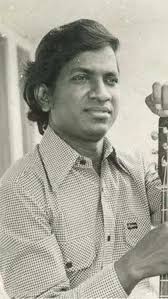
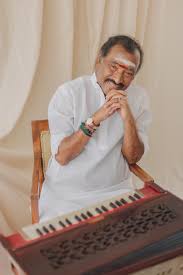
Illaiyaraja was born as Gnanathesigan in the small town of Pannaipuram on 03 June 1943. When his father enrolled him at school, he registered him as Rajaiyya, but the village folk all called him Raasaiyya. His music Guru, Dhanraj-Master renamed him Raja. When Panju Arunachallam introduced him to films, there was already a Raja in the music industry – A.M. Raja. Panju Arunachallam then added the prefix “Illaiya” (Young) to Raja and renamed him Illaiyaraja.
Illaiyaraja and his brothers formed a small group called Pavalar Brothers and they used to perform in small shows and Temple festivals. Illaiyaraja was 14 when he started his public performances. It was at this time that he composed his first song, putting into tune an elegy written by Kaviyarasu Kannadasan for Jawaharlal Nehru.
With just a few rupees in his possession, the 25-year old Illaiyaraja left home in 1968 with the blessings of his parents to learn music under Dhanraj Master. He then completed a correspondence course with London’s Trinity College of Music, earning a gold medal. He then studied Carnatic music under T.V. Gopalakrishnan.
In 1971, Illaiyaraja joined West Bengali music composer Salil Chowdhury as an assistant where he was employed as a session guitarist, keyboardist and programmer. Salil Chowdhury recognized Illaiyaraja’s talent and frequently remarked that Illaiyaraja would one day become India’s best composer and once said that “our main guitarist in Madras is the best composer in India”. Interestingly, the person who conducted Salil Chowdhury’s music in Tamil films was R.K. Shekar – the father of A.R. Rahman.
Illaiyaraja then joined Kannada music composer, GK Venkatesh as an assistant and he worked with him on 200 film scores and songs. During this time, he composed the Pallavi (first verse) of the song Then Sinthuthey Vaanam from the 1973 film Ponnukku Thanga Manasu (penned by Kaviyarasu Kannadasan) and composed the entire song Thanjavur Seemaiyile, from the same film which marked the debut of lyricist Muthulingam.
It is important to understand the context within which Illaiyaraja made his debut to films. Mellisai Mannar M.S. Viswanathan and K.V. Mahadevan had begun to reduce their film commitments between 1974 and 1975 and this saw an increase in the number of films by other music composers, some of them with only a small record of success. The number of hit Tamil songs were reduced and, for the first time, Hindi songs were more popular in Tamil Nadu than Tamil film songs.
Kannadasan’s nephew, Panju Arunachallam, was told at that time about the speed with which Illaiyaraja was working in this film. Panju then had a discussion with the directorial duo of that film, Devaraj-Mohan, about Illaiyaraja. This discussion was to have many sequels and would eventually see Panju Arunachallam approach Illaiyaraja in 1975 to score music for a film.
Panju Arunachallam’s first meeting with Illaiyaraja was an interesting one. Panju remarked that he looked much younger than his age – more like a school boy. He did not give any impression at all by the way he dressed that he knew anything at all about music. Panju even remarked that he looked like an office boy. Moreover, Illaiyaraja had met him with no musical instruments on hand.
Thinking that the meeting was a mistake, Panju asked Illaiyaraja if he could come up with some tunes for a story he was working on and gave him the gist of the plot. He then asked Illaiyaraja when he could come up with some tunes. Illaiyaraja said that he could give him some tunes immediately. Panju Arunachallam was doubtful and wondered how this would be done with no musical instruments, but asked him to go ahead. Drumming on the table he was seated at, Illaiyaraja spontaneously came up with five tunes, one of which was Machaanai Paatheengala. Panju Arunachallam, who had worked with music composers like Dakshinamoorthy, K.V. Mahadevan, S.M. Subbiah Naidoo, M.S. Viswanathan, V. Kumar, G.K. Venkatesh, T.K. Ramoorthy, Vedha and Shankar Ganesh knew immediately that this was a new flavour of tune that would be fresh in Tamil cinema. Panju then told Illaiyaraja that he would use him for his next film.
At that stage, Panju was already committed to three films, one of which the script had been completed and another that had just been launched. None of the three films would require much scope for songs, so Panju decided not to use Illaiyaraja, as he wanted to maximise his talent in a film that would give adequate scope to the music and songs.
This led to Illaiyaraja making his official debut as a music composer in 1976 through the film Annakilli produced by Panju Arunachallam and directed by Devaraj-Mohan.
Although Illaiyaraja had worked on many film songs, he expressed hesitation about how to go about scoring music for the songs. Panju Arunachallam had to reassure him that he had absolute freedom to compose as he wished to but that the directors of the film would have the final say in approving the songs. Illaiyaraja reluctantly expressed his desire to use western instrumentation and patterns for the rural-based film that had folk-style lyrics. Panju Arunachallam gave him Carte Blanche to compose as he pleased and the result was a soundtrack that completely revolutionised the approach to film music.
On the first day of recording for the first song in Annakilli – the title song – the entire orchestra, singer and Illaiyaraja were at AVM recording studios to record the song. In those days, the entire song, including the music was played live, with the singer, and recorded using various strategically-placed microphones. The first take was a perfect one, with no musician making any mistakes, but when they played back the tape, it had not recorded at all. They then tried a second take. At the time when Illaiyaraja gave the signal for S Janaki to start singing, there was a power failure. Some of the musicians, remarked that this was a bad omen and that Panju Arunachallam was taking a risk allowing someone from the lowest caste to be a music composer. These comments were not made to Panju Arunachallam, but was heard by Illaiyaraja. Undaunted, a third take was done and was successfully completed, beginning a new era in Tamil film music.
These comments about Illaiyaraja’s caste were to recur many times over, and this outdated view is still fuelling anti-Raja comments to this day. There were even well-established singers who openly showed their disdain and contempt for him because of his caste – and this included singers who had sung under his music. Some of the big production houses also initially refused to work with him, but had to review their stance when his popularity soared. This is not something that film journalists want to talk about, but it is the truth, and needs to be spoken about. There were, of course, other reasons that the anti-Raja sentiments began to grow – and increase in recent years, but that will be discussed in a future episode. However, here is something to think about: For the first 25 years of Illaiyaraja being in the recording industry, he was venerated as a God and none of the film magazines – Tamil or otherwise – spoke ill of him. That too has an explanation and that will follow soon in this series.
It must be pointed out that it was M.S. Viswanathan who extended K.V. Mahadevan’s penchant for western instrumentation to incorporate western styles in the tunes and arrangements. Thus, the first revolution in Tamil film music must be credited to M.S. Viswanathan.
Illaiyaraja was therefore the second music composer to completely change the approach to film music. Instead of creating a fusion of folk lyrics and musical instruments, he decided to merge the two into a seamless new style that would become his signature style for close to five decades.
Post Views: 9 Karthik Subbaraj’s tenth film, Dorothy, has enjoyed increased footfalls and positive reviews in its 29-day theatrical run before its release on Netflix
Post Views: 11 Nelson Dileepkumar’s sequel to his 2023 Rajinikanth starrer, Jailer, is a sincere and earnest attempt to improve on the original. Nelson has