How South Africans were robbed of celebrating Illaiyaraja’s genius
Devan Nair
Table of Contents
Post Views:312
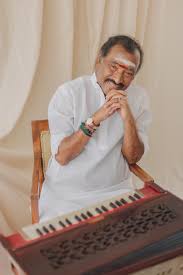
With the countdown on for the official launch of Illaiyaraja’s Symphony Number 1, the first symphony ever by an Indian composer, it is important to reflect on the way Illaiyaraja is seen by South African- Tamilians of all ages and, more importantly, on how this perception of Illaiyaraja and his music came about.
Illaiyaraja made his explosive debut to films in 1976 through Panju Arunachallam’s Annakili after many years of struggling to make a breakthrough. One of the reasons for his delayed introduction was the predominance of caste-conscious people in key positions in the industry. In his first two years as a music composer, these prejudices continued to have a severe impact on Illaiyaraja’s growth in the industry.
To understand why Illaiyaraja’s music was and remains under-appreciated by South African audiences, it is important to understand how and why Tamil became relegated to the background in South Africa – despite the fact that Tamilians comprise the overwhelming majority in the South African Indian population.
From the days of the silent era in Tamil films, Tamil films and songs were very popular in South Africa. The shops in Queen Street, Grey Street, Victoria Street and Prince Edward Street would blare out the latest Tamil songs from the latest films. Saree shops would market the sarees seen in hit movies and hairstylists were ready to replicate styles seen in various Tamil films. The popularity was such that even non-Indians would be familiar with the chorus of popular Tamil songs. This was the time when places like Padmini Music Saloon became the meeting point for lovers of Tamil film music.
When Naaz Cinema stopped releasing Tamil films and the focal point shifted to Chatsworth with cinema houses like the Odeon, Adams, The Majestic and the like now the releasing houses, the wane began in central Durban – at that point, still the only destination for Indians to buy spices, clothes and music. However, this did not change the fact that the biggest distributor of Tamil films – Mr Phiroz S Randeria, was a non-Tamilian. It also did not change the fact that almost all the vinyl albums released in Tamil were pressed and distributed by All India Record Centre – which was also owned by a non-Tamilian. Roopanand Brothers, who prided themselves in bringing North India to South Africa, also stocked Tamil books, Tamil readers, Tamil LPs, Books vontaining the lyrics of popular Tamil songs as well as Bommai and Pesumpadam film magazines.
In 1976, sales of LPs and cassettes continued but there were limited sources of Tamil music for South Africans in the media. In terms of mass media, this was virtually non-existent. There was the weekly 1-hour Sunday programme called Music in the Morning on the state –owned English Service presented by Mr Jagadeesan Devar, whose sense of fairness saw him divide the show equally for North and South Indian content that were not limited to just Hindi and Tamil. There was therefore very little available air time to play many film songs.
At the same time, there was Radio Truro, that broadcast on Shortwave from Swaziland but the managers of this station saw no need for equal airtime for South and North Indian languages, and Tamil music was limited largely to slots presented by Tamil presenters like Mrs Kumarie Ambigai and Mr Woolaganathan “Dinky” Pillay.
When the SABC started Kaleidoscope in late 1981, there was virtually no Tamil music being broadcast, as the two presenters – Farida Ismail and RB Ram – saw no merit in Tamil songs and believed that only Hindi music was worthy of airtime.
When Radio Lotus (Now Lotus FM) began in 1983, these two personalities greatly influenced the SABC into believing that equal airtime for North and South Indian music was neither necessary nor desirable. Radio Lotus operated on the assumption that people did not like Tamil music and that there was therefore no need to even attempt to get Tamil music.
In the first 3 years of its existence, Radio Lotus played less than 1% of Illaiyaraja’s music – and this was in the heydays of Illaiyaraja’s music when rich instrumentation accompanied his complex compositions. The problem was exacerbated because during the same period, there were very little imports of Tamil music on vinyl or audio cassette, except for a few isolated outlets like Film Star Movies SA and Sothi’s Gift Centre – both in Chatsworth – that brought in limited stock for their regular customers. Others had no access to new music unless, like me, they would record songs straight off the VHS tape.
At the same time, The Graphic –a newspaper that did a lot for the success and popularity of Tamil films and music – closed its doors. Roopanand Brothers’short-lived attempt to print the Malaysian-based Movieland Magazine in South Africa also collapsed. Existing papers like The Leader (which did not outlast The Graphic for long), The Post, The Sunday Times Extra and The Sunday Tribune Herald did not see the need to focus on Tamil cinema until more than a decade later.
When Lotus FM finally became a public broadcaster in 1995 and directed to share airtime equally between North and South Indian music, the damage against Tamil music had already been inflicted. Illaiyaraja, by the mid-1990s had gone into a self-inflicted semi-retirement stage and there was talk that he would pursue more serious music compositions like he did with How to Name it, Nothing but Wind and, very much later, The Thiruvasagam.
The new RJs at Lotus FM wanted to project dance music as the music of choice and they were looking for Tamil music that dispensed with the intricacies of a Carnatic music base and were looking rather for western-based songs with popular western music as a template. To these ears, lyrics, meanings of lyrics and musical richness were totally unimportant as long there was a thumping rhythm with a heavy bass percussion. This clearly made Illaiyaraja’s music unsuitable for such tastes.
With Tamil music finally given more airtime on Lotus FM (a short-lived period of about five years), the playlist was dominated by AR Rahman, Deva, Vidhyasagar, SA Rajkumar, Adhithyan and Sirrpi, later to include Karthik Raja and Yuvanshankar Raja. This meant that a large percentage of the new patrons of Tamil music did not know anything beyond these mentioned composers. Included among the list of forgotten composers were MS Viswanathan and Illaiyaraja – both of whom had revolutionized and modernised film music whilst still remaining Carnatic-based.
The point we have reached now in South Africa is where many people, including the older folk, are saying that they want “modern music” – which usually means compositions styled on western pop music where only the lyrics have been changed to a watered down version of Tamil, but the rest of the song retains its modern base.
Clearly, there have been notable exceptions to this trend and there were many songs that were ruled by melody that also found favour with South African audiences (like Malare Mounama, Pulvelli Pulvelli, Maname Thottaa) , but even those songs now find no place on radio playlists.
The average South African has little or no idea of the fact that Illaiyaraja is, by every definition of the word, a musical genius. They have no idea about how tunes and compositions flow almost uncontrollably from him, of how he has composed entire albums in under 30 minutes and how he writes musical scores for multiple instruments in a matter of seconds. They have no idea of how he has blended various musical styles seamlessly into songs that drive its listeners to tears simply by hearing the tune. They have no idea of how he revolutionised background scores and brought to prominence the importance of background scores in films.
These people know only about how Illaiyaraja has taken to task people who have used his music without permission (note, not compensation, but permission), but have no idea of how he has done entire films (songs and background score) completely free for aspiring directors. This long list includes directors Maniratnam and P Vasu.
Illaiyaraja frequently admits to his quick temper, but has repeatedly said that he cannot control it. All geniuses have some character flaw and this has been Illaiyaraja’s but if one examines his tirades, one can easily distinguish a pattern – in that he loves music more than anything else and that his impatience all emanates from this intense love for music. This is reflected in his view that he is still learning music and that he would stop composing when he stops learning. This is why he still thrives in the film industry after more than 1200 films across a 49-year career.
The launch of his Symphony Number 1 will undoubtedly bring additional fame and recognition – not only to himself, but to Tamil music in general.
Enjoy the playlist of Illaiyaraja songs that became South African favourites
Post Views: 10 Karthik Subbaraj’s tenth film, Dorothy, has enjoyed increased footfalls and positive reviews in its 29-day theatrical run before its release on Netflix
Post Views: 12 Nelson Dileepkumar’s sequel to his 2023 Rajinikanth starrer, Jailer, is a sincere and earnest attempt to improve on the original. Nelson has