“Iyakunar Sigaram” K. Balachander – The man who changed the face of Indian Films
Devan Nair
Table of Contents
Post Views:147
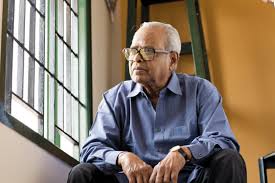
Writer, director, producer and actor K. Balachander was born in the Thiuruvarur district on 09 July 1930.
He got to enjoy watching movies from the time he was eight years old, finding a particular fascination for films by M.K. Thyagaraja Bhagavathar. At the age of 12, he joined a drama group and learnt all the finer aspects of the stage. This led to him eventually writing his own plays after completing his tertiary education. His successful plays included Major Chandrakanth, Server Sundaram, Neer Kumizhi, Naanal and Navagraham – all of which were later made into films, each enjoying wider success on the silver screen.
He was introduced to the silver screen as a scriptwriter in MGR’s Deiva Thaai, although it was a move he had initially resisted. His first film as director was the 1965 film, Neer Kumizhi, which began a new era of filmmaking in Indian cinema.
K. Balachander became one of the most influential directors of Indian cinema introducing new faces to the screen and shaping or boosting the careers of established actors.
Kamalhaasan played his first major role as an actor under K. Balachander’s direction in the 1973 film, Arangetram, a film that would later see Balachander make his entry to Hindi cinema when he remade this film into Hindi. Kamalhaasan would go on to star in 35 films with Balachander.
Balachander created his unique style of narration and screenplay that extended the visual medium and explored new themes, characters and situations – often challenging societal norms through controversial characterisation. Whether it was the poverty and prostitution in Arangettram, the philandering lifestyle of the protagonist in Naan Avanillai or the inter-generational romance in Apoorva Raagangal, Balachander was unafraid to make his bold statements about real problems and real situations in life.
Apoorva Raagangal introduced Rajinikanth to the screen in 1975, and a year later he introduced the teenaged Sridevi as a lead actress in Moondru Mudichu, sharing the screen with Kamalhaasan and Rajinikanth.
In his subsequent films, Balachander continued to explore daring subjects that continually pushed the boundaries of public acceptance.
In 1981, Balachander re-entered the Hindi market with a film that forever changed Indian cinema. Titled Ek Duuje Ke Liye, the film was a remake of Balachander’s Kalhaasan-Saritha starrer, Maro Charithra, and was an explosive hit that introduced Kamalhaasan and Rati Agnihotri to the Indian audiences and saw S.P. Balasubramaniyam take the music world by storm, winning a national award for his effort. The film was also nominated in other categories for national awards and won the Filmfare award for best Screenplay.
In 1985, Balachander teamed up with Illaiyaraja for the first time with the musically-based Sindhu Bhairavi which won national awards for Illaiyaraja and Chithra and became another reference point for aspirant filmmakers.
Apart from the many new faces Balachander introduced to the screens, he continued to reshape and redefine the acting careers of various artists in the film industry. Among those he introduced as lead actresses were Sridevi, Shrividya, Sujatha, Jayapradha, Jayachithram Jayasudha and Saritha. He also launched the careers of Rajinikanth, Vivek, Prakash Raj, Nassar, Delhi Ganesh, Charlie and Madan Bob.
As a producer, he showed the same willingness to experiment and was directly responsible for introducing A.R. Rahman through the film Roja, which was produced by Balachander’s own production company.
Balachander’s protagonists were often rebels and his lead actresses showed remarkable independence and spark. No theme was taboo for him and he bravely defied the concept of audience perception.
K Balachander passed away on 24 December 2014 at the age of 84.
Post Views: 3 Kamal Haasan-Rajinikanth starrer back on track After some uncertainty about the project, the much publicised film with Kamal Haasan and Rajinikanth sharing
Post Views: 12 Karthik Subbaraj’s tenth film, Dorothy, has enjoyed increased footfalls and positive reviews in its 29-day theatrical run before its release on Netflix