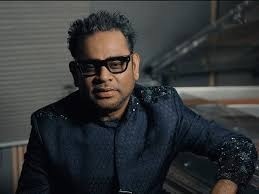
The current furore over A.R. Rahman’s comment in a BBC interview recorded on 14 January 2026 is unlikely to dissipate soon.
In the interview, Rahman remarked that he was not getting enough work because he is Muslim.
The comment might have seemed innocuous to him, but the severe backlash from all quarters saw him apologise for the incorrect impression created by the remark. In his clarification, he reaffirmed his patriotism and his gratitude to his fans – but it seems that his original comments have done irreversible reputational harm to him as many commentators have dismissed the apology as a half-hearted one.
The comment was reckless because of two reasons.
Firstly. Rahman, who is now an international figure, was speaking on an international platform about why he believed his film assignments had dwindled. Whilst the reference was specifically to Hindi films, it is a well-known fact that his film assignments have dwindled in the last five years. As a representative of a minority group in India, the impression unfortunately created is that minorities are badly treated in India.
Secondly, it is truly unfortunate that Rahman decided to air this opinion to a journalist of Pakistani origin, because the relationship between India and Pakistan have always been strained.
It is equally unfortunate that he labelled as “divisive” the film Chhaave – when it was a film that featured his music.
Rahman has been admired, adored, followed, emulated and almost worshipped by millions of people and, since his debut to films in 1992, there has never been a reference to his faith. His faith did not matter to his fans because his music spoke louder than his religious identity.
Most Indians had even forgotten that he was once a Hindu – called Dileep Kumar – who converted to Islam in 1989, thirteen years after the death of his father. For almost everyone, his religious identity was irrelevant.
It was this religious identity that saw him enter the music industry, win numerous state, national and international awards – including 2 Academy Awards, 2 Grammy Awards, a BAFTA Award as well as a Golden Globe. It was this religious identity that saw him become one of the most sought after music composers in the North and South of India during the 1990s. It was the same identity that saw him being signed up by every major production house and director in the south.
It is also this Muslim identity that saw him being signed on to score music for the Hindu epic, Ramayana
To therefore attribute his declining marketability to his faith was a blow below the belt in a country that has been making huge strides towards creating religious harmony.
Although Hindus form the overwhelming majority in India, they elected a Muslim – Dr A.P. J. Abdul Kalam – as their President, easily the most popular Indian President since Independence. Ustad Zakir Hussain was India’s global ambassador for music and was also awarded the Bharat Ratna, Padmashri, Padmabhushan and Padma Vibhushan from the Government of India. Archaeologist K.K. Muhammad is the recipient of the Padmashri and held numerous senior Government positions.
On the cinema front, people adored Shah Rukh Khan, Aamir Khan, Salman Khan, Saiff Ali Khan, Irrfan Khan from Bollywood while in the south Mammootty, Naassar, Fahadh Faasil and Rakiran are all Muslim. Even Yuvanshankar Raja is now Muslim. To therefore suggest that one’s religion determines which doors open or close is disingenuous.
Whatever the reasons are for the decline in job offers for Rahman, his faith is not one of them. To suggest it is so, has been criticised by many as succumbing to victimhood mentality.
The issue has placed Rahman and his family under the microscope and the picture emerging on all social media platforms is far from flattering. His critics – and even his erstwhile fans – have now unearthed articles and anecdotes that are slowly stripping away the image that Rahman had before his interview last week – The image of a humble, peace-loving and deeply religious man. That image has drastically changed if the banter on social media is anything to go by.
Post Views: 9 Karthik Subbaraj’s tenth film, Dorothy, has enjoyed increased footfalls and positive reviews in its 29-day theatrical run before its release on Netflix
Post Views: 10 Nelson Dileepkumar’s sequel to his 2023 Rajinikanth starrer, Jailer, is a sincere and earnest attempt to improve on the original. Nelson has