In this episode
* G Ramanathan transforms Tamil film music
* Tamil cinema’s first dual role
* Ellis R Dungan records more firsts for Tamil cinema
* NS Krishnan’s own production makes waves
* Social drama in a thriller format
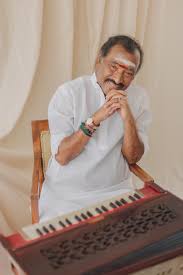
Presenting Carnatic music in a modern package: G Ramanathan
Gopalan Ramanathan was orphaned at a young age and was raised by his elder brother.
He made his debut as a music composer at the age of 28 when he was signed on to score the music for MK Thyagaraja Bhagavathar’s, 1938 film, Sathyaseelan.
G Ramanathan eventually became the resident music composer of Modern Theatres which was owned and run by TR Sundaram Mudaliar.
The remarkable thing about G Ramanathan is that he had no formal training in music and he could neither read nor write music. Instead, he composed and played music by ear. He was noted for his transformation of Carnatic-based songs into lighter melodies. This saw him complete more than 150 films as a music composer.
He had worked with all major singers of his time, including MK Thyagaraja Bhagavathar, CS Jayaraman, Thiruchi Loganathan, AM Rajah, TM Soundararajan, PB Srinivas, Seergazhi Govindarajan, AL Raghavan, KJ Yesudas, P Susheela, S Janaki, ML Vasanthakumarie, LR Eswari, K Jamuna Rani and the Sulamangalam sisters.
Why the film Kalamegam has earned itself an immortal spot in Tamil cinema history.
Kalamegam (1940) was directed by American film directors Ellis R Dungan and William J Moylan, and was the only film appearance of Nadhaswaram player TR Rajarathnam Pillai, who played the male lead. It was also the second film scripted by the famous Bharathidasan.
Bharathidasan’s real name was K Subburathinam, but he was an ardent follower of freedom poet Mahakavi Subramaniya Bharathi. Suburathinam therefore christened himself Bharathidasan and used this name for the rest of his life.
Kalamegam was based on the life of the 15th Century Tamil poet, Kalamegam. Although the film was not a box-office hit, the techniques used by Ellis R Dungan and William J Moylan in this film was unique to Tamil cinema and the film is now widely recognised as an inspiration for future filmmakers.
This film released on 17 May 1940.
Ellis R Dungan’s Sakuntalai records some firsts for Tamil cinema
Popular singer MS Subbalakshmi and her husband, T Sadasivam formed a production company called Royal Talkies and approached director K Subramanyam to make a film on the life of Sakuntalai.
Dungan had a scene that was filmed in slow motion through a glass tank filled with water. Dungan made waves when he used a scantily clad British girl in this scene wearing a tight-fitting one-piece swimming costume. The scene had the board of Censors eager to have it removed but MS Subbalakshmi’s husband, T Sadasivam made successful representations to have the scene retained.
NS Krishnan’s own production makes waves in 1940
Comedian NS Krishnan formed his own production company – Asoka Pictures – which produced the 1940 film Naveena Vikramadityan. The film featured NS Krishnan in the lead role in a story based on the 1933 Hollywood film, Roman Scandals.
One of the notable aspects of this film is that roller skates were not well known in India at the time. NS Krishnan had a few pairs imported and spent many hours practicing just for the film. These skating scenes and the film’s comedy ensured its success
TR Sundaram, the founder and owner of the Selm-based Modern Theatres made waves with the1940 film, Uthama Puthiran, which was based on a novel by Alexandre Dumas. The film became the first Tamil film to feature a dual role with the film’s lead actor, P.U. Chinnappa. The dual role scenes, which featured a combat scene as well werefilmed with the assistance of German technician, Bodo Gutschwager. Popular Kannada actress, M.V.Rajamma played the female lead while the comedy duo, NS Krishnan and TMadhuram, were partially responsible for the film’s success.
The film began a new trend in Tamil cinema of dual roles and Uthama Puthiran itself had several adaptations. One such adaptation was the 1949 film Apoorva Sagotharargal which was produced by Gemini Studios and had MK Radha playing the lead roles. The film was later remade in 1958 with Sivaji Ganesan playing the lead roles. In addition, MGR’s 1071 film Neerum Neruppum was also an adaptation of this film.
Apart from this trend, the success of Utham Puthiran boosted the popularity of its lead actor and singer, PU Chinnappa.
Social message in a thriller format: Jayakodi
Although TK Rukmini was already a successful actress at the time of the release of the film Jayakodi, the film made of her a star. Released on 17 March 1940, Jayakodi was brave and loud voice against the dowry system which was couched in a commercial thriller format. The film deals with how a personal tragedy turns Rajam (TK Rukmini) into a social activist, targeting those men who demand a dowry from their prospective wives. Story and direction was by Bhagwan Dada with scripting by RV Swamy and SR Sarangan